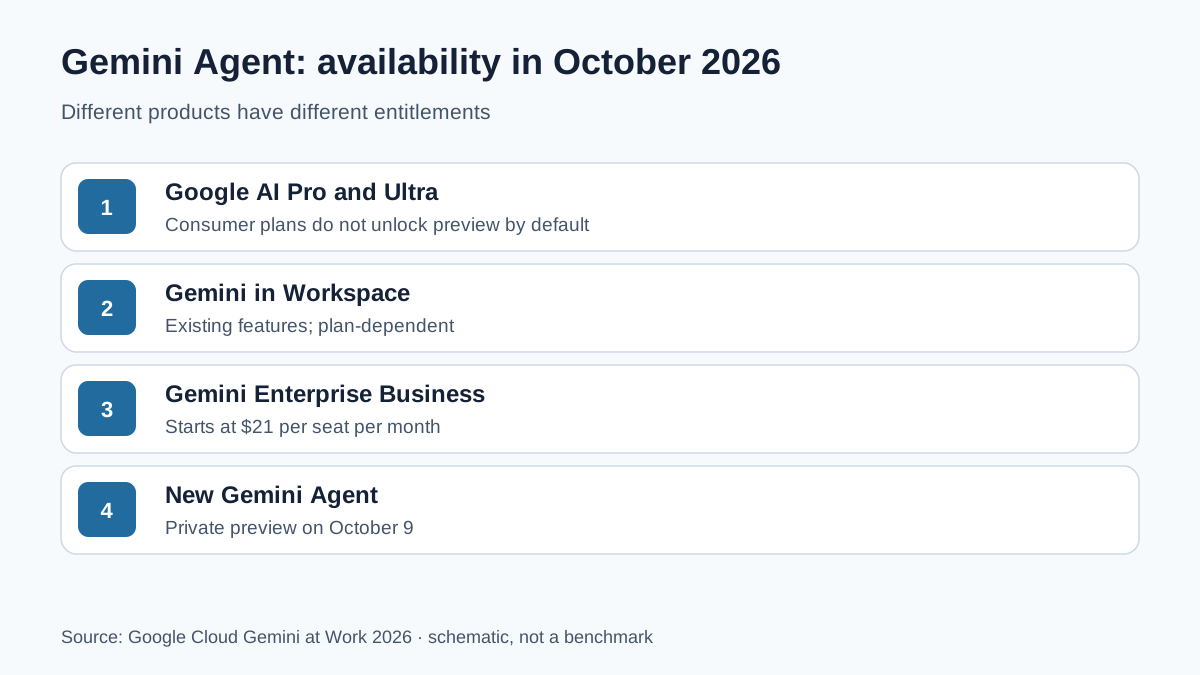
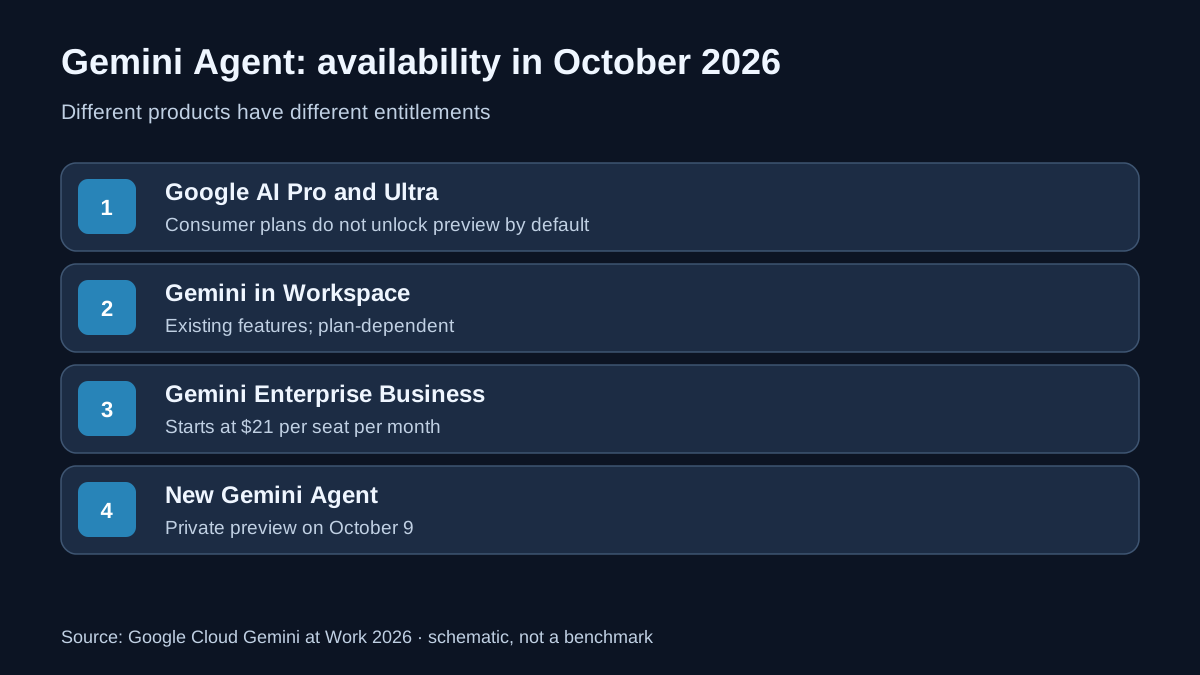
At Gemini at Work 2026, Google Cloud introduced a new, universal Gemini agent designed to complete workplace assignments rather than simply answer prompts. Google says the system can plan multistep tasks, use enterprise tools, write and execute code, work inside documents and inboxes, coordinate specialist subagents, and continue running in the cloud after a user closes their laptop. As of October 9, however, the new agent is in private preview for selected enterprise customers. It is not automatically unlocked by signing up for an ordinary Google AI subscription.
The more important technical change is structural: Gemini is the agent, not necessarily the model performing every step. Google’s announcement describes routing work across its own Gemini models and Anthropic’s Claude family, with broader model choice planned. The company’s customer-facing product page still labels third-party model selection and certain persistent background tasks as early-access capabilities. That qualification matters more than the marketing demos if you’re deciding whether to migrate a real workflow.
Key facts, without the rollout confusion
| Question | Verified position on October 9, 2026 |
|---|---|
| What was announced? | A unified agent capable of planning, executing and supervising multistep work. |
| Where does it run? | Cloud-hosted execution with web, Workspace, desktop, mobile, CLI and third-party access described; some channels remain early access. |
| What does it connect to? | Google Workspace, Microsoft 365, Slack, Git/Jira/Confluence and supported data services, subject to connectors and permissions. |
| Does it support Claude? | The announcement includes Claude; third-party model choice is not generally available across all customer editions. |
| Can I sign up today? | Gemini Enterprise products can be purchased or trialed, but the newly announced universal agent has selected-customer preview access. |
| How much is it? | The public Gemini Enterprise Business entry plan starts at $21 per seat/month; that is not a confirmed universal-agent all-inclusive price or guaranteed preview entitlement. |
| Does it run locally on a Mac? | No. The described persistent agent workloads run in Google Cloud; macOS is a way to access them. |
From chat responses to delegated outcomes
Traditional assistants answer a question and wait for the next message. Conventional workflow builders execute predefined rules. Google’s proposed universal agent accepts an objective, determines which skills and tools to apply, coordinates work and returns deliverables through the apps employees already use. According to Google, an assignment may run for hours or days and resume in the same context across devices.
The planned design combines five capabilities: persistent tasks that survive device sessions; subagents spun up for specific subtasks; memory spanning sessions and procedures; tool access through existing company systems and MCP connections; and model routing that selects different underlying models for different tasks. None of those descriptions should be taken as evidence of an unrestricted agent that can use every integration with no setup.
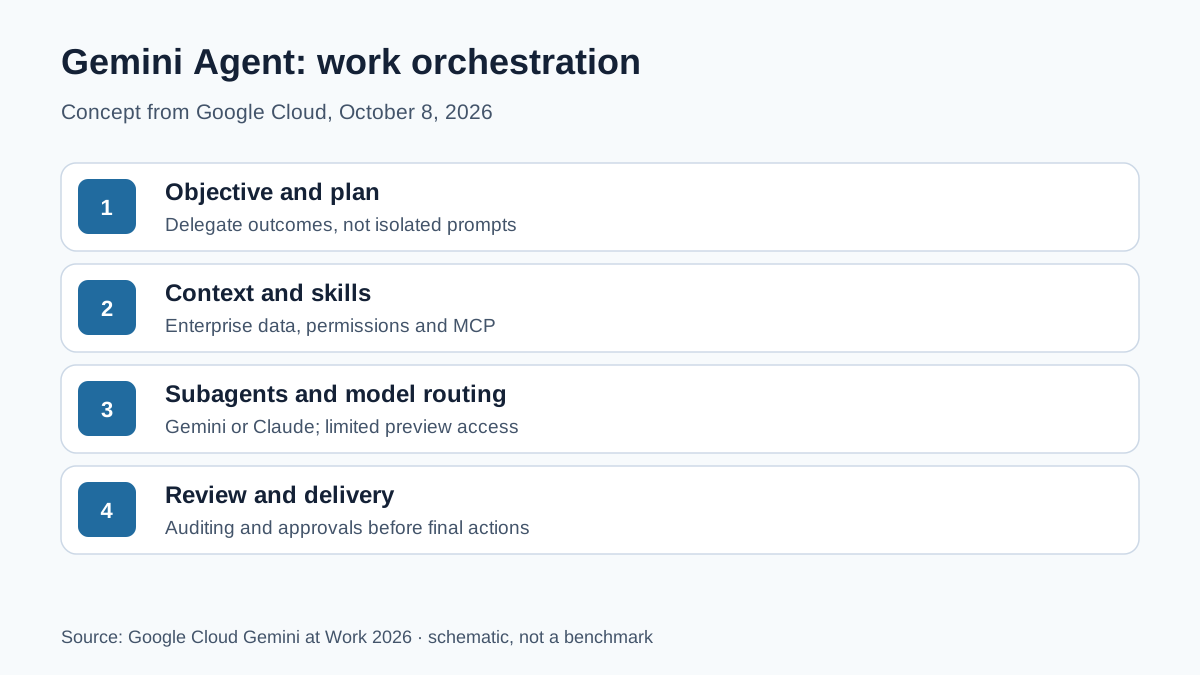
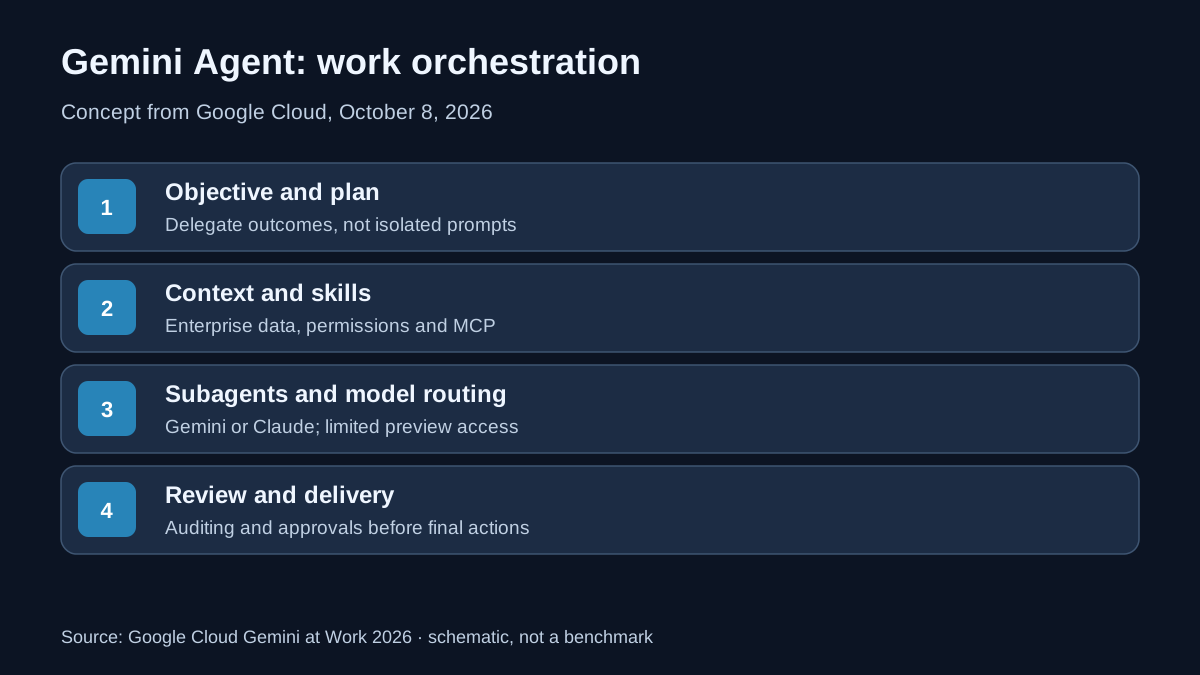
Google identifies four categories of memory: session, semantic, procedural and episodic. In plain terms, these refer to what the system is working on now, facts relevant to the business, repeatable methods and previous actions. These are descriptions of a proposed managed service, not evidence that every user can inspect, export or control each category the same way.
Gemini Agent vs Gemini Workspace vs Gemini Spark
A major source of confusion is that Google’s AI portfolio already had several agent-like features. Google Workspace added more cross-app drafting and coordination capabilities in September. Workspace Studio is a no-code automation environment. Gemini Spark was announced as a consumer-oriented, always-on personal agent in May. The October enterprise universal agent brings a different identity and execution model.
| Product | Primary role | Don’t confuse it with… |
|---|---|---|
| Gemini inside Workspace | Assistance in Gmail, Docs, Slides, Sheets, Drive and Chat | Guaranteed access to all newly announced universal agent features. |
| Workspace Studio | User-built triggers, actions and repeatable automations | The new cross-device, task-delegating unified agent. |
| Gemini Spark | Consumer-oriented personal agent | Enterprise coworker accounts and organization-level permissions. |
| Gemini Agent, announced October 8 | Persistent end-to-end work with enterprise tools, team identities and multi-model architecture | A generally available consumer app. |
Google is also moving toward reusable skills. These are modular instructions and workflows that can be applied across tasks, not standalone agents in themselves. Workspace’s transition from Gems to skills has its own rollout dates and shouldn’t be presented as the release date of the universal Gemini agent.
Four workflows Google wants Gemini to handle
Coordinating work across email and calendars
In Google’s example, a user asks for a meeting with the usual group. Gemini uses shared business context to identify relevant people, checks calendars and initiates scheduling. Another example starts with market research, moves to a spreadsheet model and ends with a slide deck. These are vendor-described scenarios, not results from a published independent hands-on review.
Producing and running code
Google explicitly describes code generation and execution alongside development integrations such as Git and Jira. Its related agent-platform material covers managed runtime environments, evaluation and security controls. The existence of those building blocks does not prove that a user can safely grant any repository unrestricted write access. Repository-specific permissions, testing and human approval should remain part of a production process.
Working as a team member
A coworker agent is more than a named chat: Google describes a managed identity that may have its own email address, Calendar, Drive and directory presence. A team can share work with it or mention it in a collaborative space. According to Google’s stated design, actions are attributed to the agent in audit logs rather than being silently recorded as a human employee’s work.
Running long tasks in the cloud
A Mac, PC or mobile device initiates the job, but persistent execution is cloud-side. That separation could help teams running long research and operational assignments. It does not mean infinite quotas or zero operational overhead: enterprise policies, model budgets, external API availability and unresolved approvals can still interrupt the workflow.
The multi-model design: Gemini can use Claude
Google Cloud CEO Thomas Kurian described a clear boundary between the agent’s orchestration layer and the models underneath. The announcement names Google’s own models and Anthropic Claude models. The agent is supposed to use the model suited to each task rather than send every step to the most expensive frontier model. TechCrunch independently reported that users would also be able to choose a model in supported workflows.
There is an important caveat: the live product page says additional model availability is coming and labels third-party choice as early access. The right reading on October 9 is announced and previewed, not universally enabled. Google’s statements do not establish that existing personal Claude subscriptions can be linked or that Claude access comes with unlimited usage.
Performance remains an open question. Routing may reduce token costs on routine work, but multi-step jobs can generate additional tool calls, retries and output. A fair evaluation should compare cost per successfully completed task, approval effort, recovery rate and error frequency, not just per-token list prices.
Availability, subscription pricing and usage costs
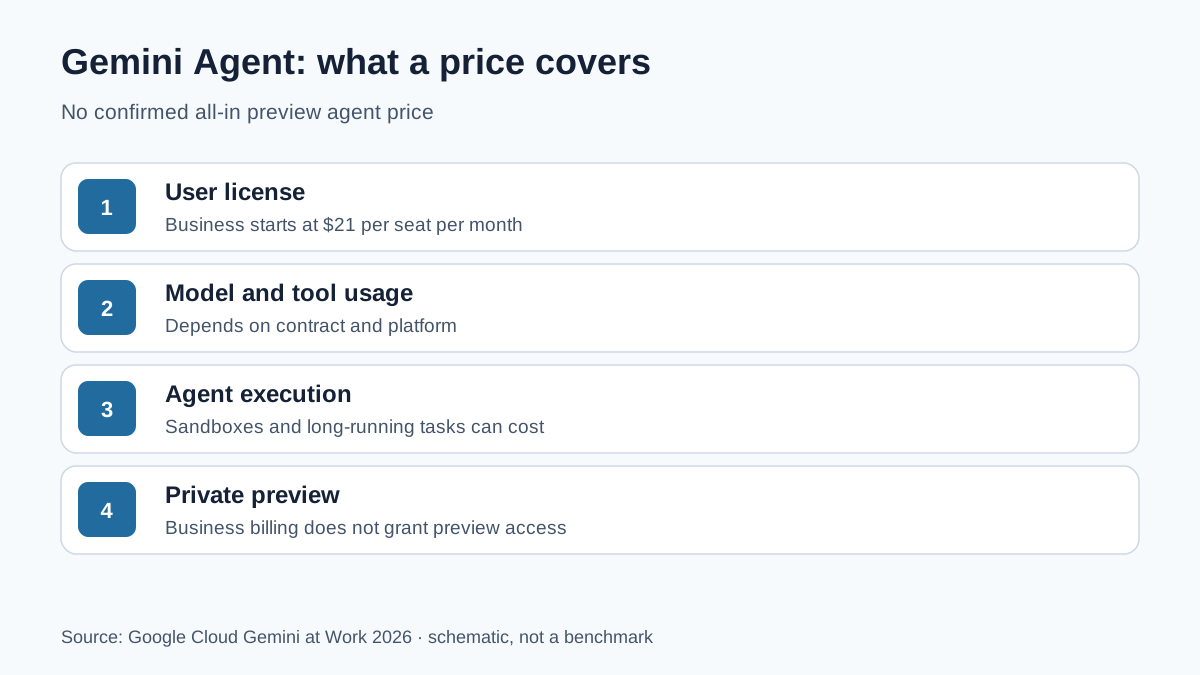
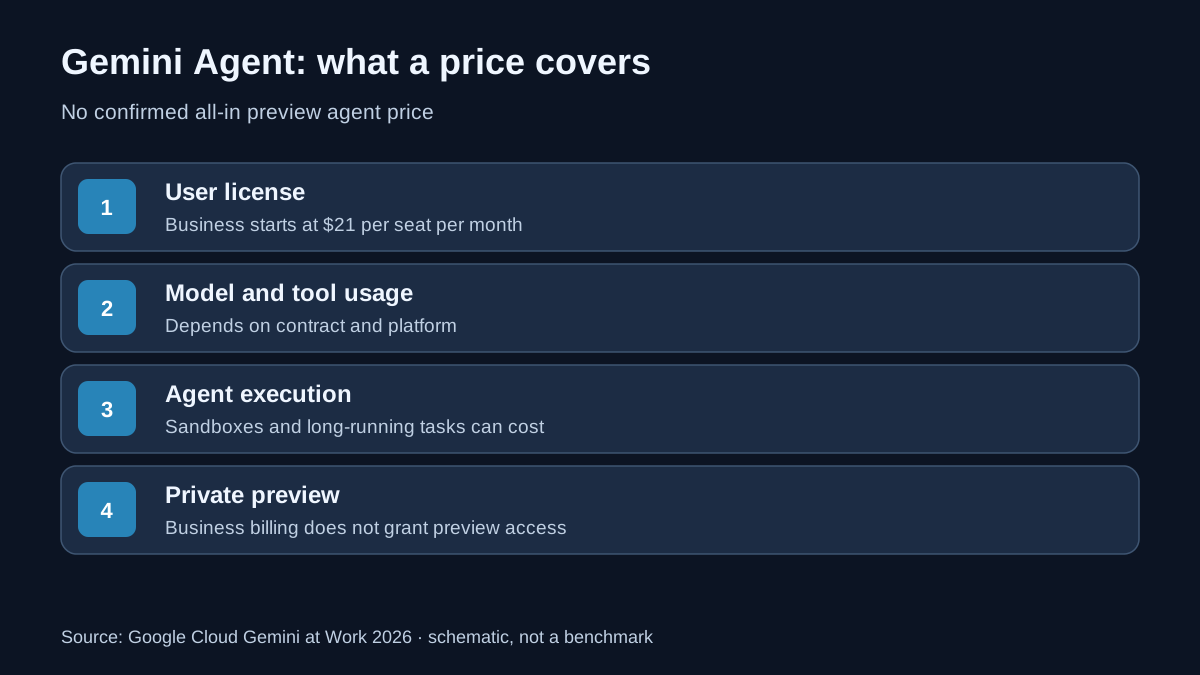
Google lists Gemini Enterprise Business starting at $21 per seat per month. This is a published US-dollar starting price for an existing business product. It is not proof that any customer buying that tier on October 9 gets all the features demonstrated for the new universal agent. Google’s new product page explicitly marks certain core capabilities as early access.
Three layers should be evaluated separately:
- Enterprise access: a seat-based subscription or negotiated company arrangement; verify the edition, region, seat requirements and included services.
- Consumption: in certain metered platform configurations, tokens, compute, memory, storage and external tools can affect total cost. Google’s Agent Platform pricing is relevant to infrastructure planning but should not be substituted for the customer-facing Gemini Agent quote.
- Feature rollout: private preview is an entitlement separate from a standard billing account. An Enterprise trial is not a guarantee of access to unreleased agent functions.
VentureBeat reports that Google expects the agent to be included in applicable Gemini Enterprise arrangements without an additional standalone agent fee after the wider launch. That is a reported rollout plan, not an audited final price schedule; no date for general availability had been confirmed at the time of this article.
For a US reader considering an individual subscription instead, see our separate 2026 Google Gemini pricing guide. Consumer AI Plus, Pro and Ultra plans should not be conflated with Gemini Enterprise or developer API billing.
Security, permissions, privacy and the unresolved risks
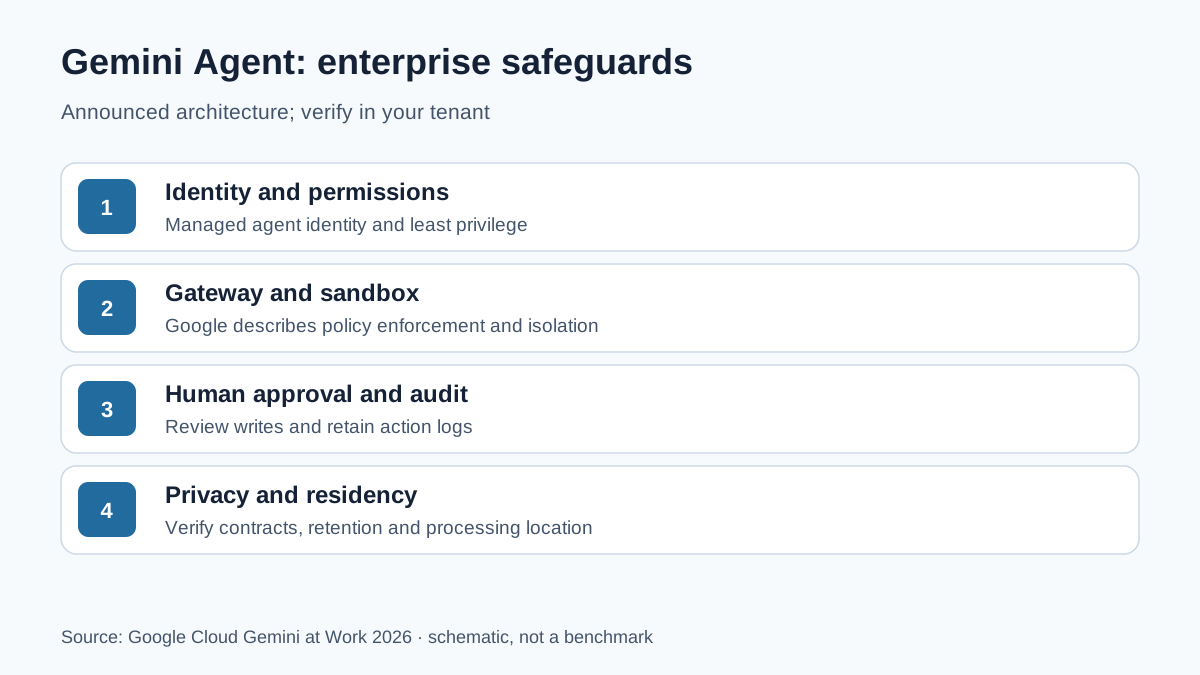
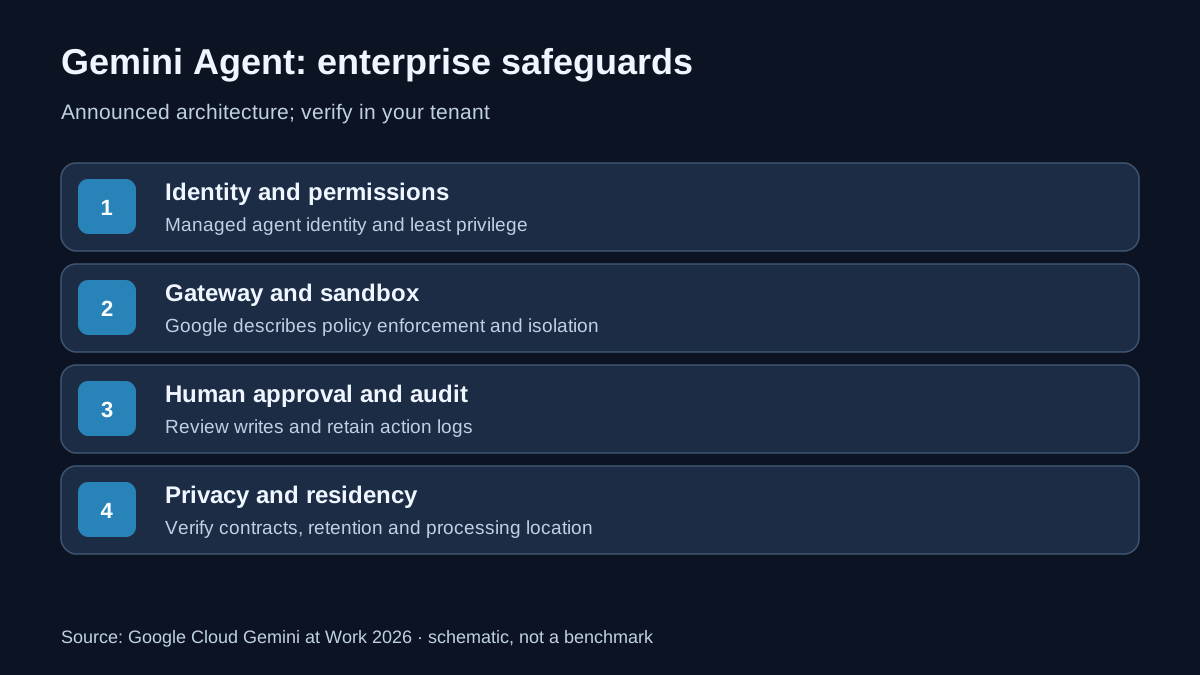
A useful autonomous agent often needs access to high-value data: messages, project repositories, calendars or internal files. Google says its managed approach uses individual agent identities, scoped access rights, recorded actions, sandboxed execution and Agent Gateway policies. These building blocks were discussed in earlier Google Cloud security announcements as well as the October keynote.
On its enterprise product page, Google states that business customer prompts and outputs are not used to train Google’s models or models for other customers. That is a statement about its defined enterprise service, not a blanket promise about unrelated consumer products, unmanaged third-party connectors or every possible deployment configuration. Organizations still need to check the contract, data location, retention, connector permissions and applicable regulations.
Security controls should be tested, not merely ticked off. A practical pilot should include prompt-injection attempts embedded in retrieved files, expired credentials, unauthorized document access, unintended email sending, and tasks that would exhaust the configured budget. Assign human approval before irreversible actions and keep a record of exactly which action each agent took.
What this means for Mac users and small development teams
Gemini Agent isn’t a new local Gemini checkpoint, MLX model or Ollama package. Google describes cloud-hosted task execution. On a Mac, the value proposition is access to managed integrations and background processing rather than private on-device inference. Whether that is attractive depends on your security requirements and the amount of work already concentrated in Workspace, Jira, Git and enterprise data platforms.
For small businesses, Google’s separate October 8 announcement positions the agent as a way to automate administrative and operational work. But given the limited preview, independent budget and workflow validation is more useful than assuming a managed agent will immediately replace a customized local orchestration stack.
A reproducible evaluation plan for the wider release
No independent benchmark for this finished universal agent is presented here. Once access becomes available, a defensible comparison would use a fixed suite of tasks:
- A document research assignment requiring traceable source citations.
- A calendar coordination task involving at least one approval.
- A Git issue fixed through a change that must pass existing tests.
- A data report using verifiable queries and calculations.
- A cross-app project update with no permission escalation.
Record task success, wall-clock completion time, human interventions, number of model/tool calls, total bill, failure recovery and audit completeness. Repeat on the same source data and permissions using a competing setup. Publish exact software/agent versions, date, region and exclusions. Such data would provide a concrete reason to read beyond a short announcement summary.
Why the announcement matters, and what is still unproven
Google’s October 8 announcement is significant because it makes the agent the persistent work layer rather than tying every workflow to one chat or one model. Its proposed integration of business memory, agent identities, subagents, tool registries and even Claude models could be useful for businesses with substantial existing cloud infrastructure. For now, the limitation is decisive: the newest universal agent is a selected-customer preview, not a widely available consumer feature. Wait for confirmed access, contractual pricing and repeatable field testing before planning a migration.
Related: US Gemini subscriptions and API pricing · Gemini 3.8 Flash API cost and deployment context.
Sources, verification and limitations
The product capabilities are vendor claims announced October 8, 2026, not features we reproduced on a Mac. Preview access and prices were checked on October 9, 2026. Gemini Enterprise Business, the new universal Gemini agent, consumer Google AI subscriptions and Agent Platform are distinct products with different access and billing terms.
- Google Cloud: Gemini at Work 2026 keynote and architecture – primary source for agent identity, subagents, MCP, model routing, cost controls and Workspace.
- Google Cloud: Gemini Enterprise – edition scope, enterprise data practices and staged features.
- Gemini Enterprise Business – public starting price of $21 per seat per month; not a preview entitlement.
- Gemini Enterprise Agent Platform pricing – platform/usage rates, not an all-in work agent subscription.
- Google Workspace Studio – a separate, previously launched workflow product.
- The Verge and TechCrunch – independent coverage of the limited private preview.
We have not used the enterprise private preview, independently benchmarked the system or measured agent invoice totals. Sensitive data workflows require least-privilege controls, approvals and a vendor/contract assessment.
Frequently Asked Questions
Is Gemini Agent included with Google AI Pro or Ultra?
Not automatically. The new universal work agent announced October 8, 2026 is in private preview for selected enterprise customers. Consumer Google AI tiers and Gemini Enterprise have distinct entitlements.
How much does the new Gemini Agent cost?
An all-in public price for the complete preview agent has not been verified. The existing Gemini Enterprise Business edition starts at $21 per seat per month, which does not guarantee preview access.
Can Google's work agent use Claude?
Google describes routing between its Gemini family and Anthropic Claude models. Third-party model choice and other functions may require restricted or early access.
Will Gemini Agent run locally on an Apple Silicon Mac?
No. The announced long-running work executes in Google's cloud. A Mac can be a user interface or client, not the inference host; Ollama and MLX are different options.
Does using Gemini Agent guarantee U.S.-only or EU-only data processing?
No. Data residence depends on the actual edition, contractual terms, service configuration and subprocessors. The announcement alone does not establish country-specific processing or compliance.