Short answer
Inkling 2 Mini is one of the few strong open agentic models that fit on a Mac. 32GB is the practical floor; 16GB works only with a 2-bit quant and a short context. Ollama is the easiest route today, while mainline llama.cpp and stock mlx-lm still lag.
- Parameters
- 26.4B total, 3.4B active per pass (5.4B effective with loops)
- Mac floor
- 32GB Apple Silicon officially; 16GB only with a 2-bit quant (8.5GB)
- Measured speed
- 11.6 to 83.4 tokens/s depending on Mac, runtime and quant
- Easiest route
- Ollama 0.40.17+ (Apple Silicon only)
Last reviewed: November 24, 2026
Researched and edited with AI assistance. Editorial responsibility: Julian Dominic Altmann. Facts as of November 24, 2026. Source analysis; no first-hand measurements yet.
Yes, if your Mac has Apple Silicon and 32GB or more. That is Thinking Machines Lab’s official floor for Inkling 2 Mini, a 26.4-billion-parameter open-weights model released November 20, 2026 under Apache 2.0. A 2-bit community quant also ran on a 16GB Mac mini M4, with trade-offs. Announcement · model card.
Four days after launch, Mac results are scattered across blogs and forums, each with a different quant, runtime and prompt length. This page lines them up with their conditions, shows what fits in your memory, and checks whether the API is the cheaper option anyway. Our own run on a Mac mini M4 with 32GB will follow as an update.
Which Mac tier are you?
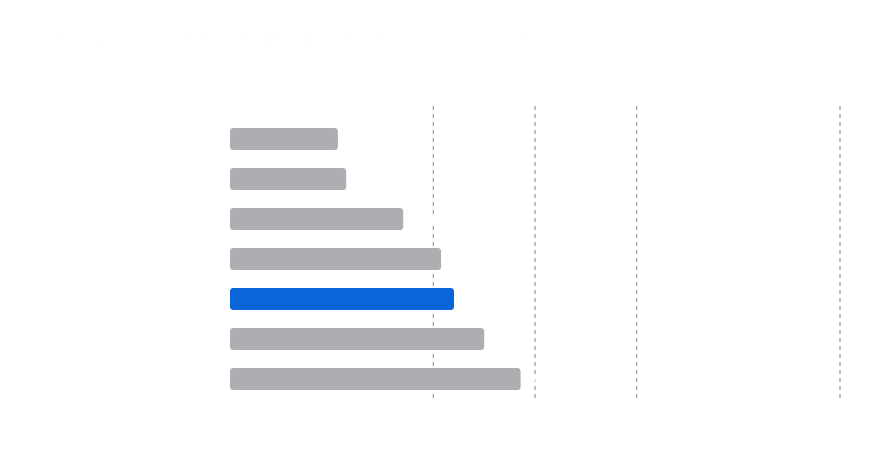
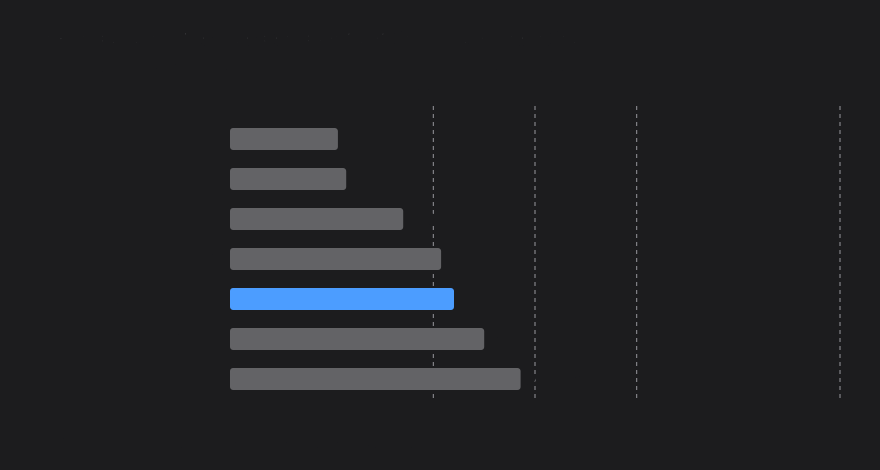
- 16GB (M1–M5): Only 2-bit quants fit. UD-IQ2_XXS (8.49GB) ran fully on the GPU of a Mac mini M4 with an 8,192-token context. Hack-Log. Unsloth measures 90.6% top-token agreement with its 8-bit reference at this size.
- 24GB: Tight. On a MacBook Pro M4 Pro, the 3-bit file (13.63GB) was killed twice during loading. 2-bit ran with some expert layers on the CPU, and a 12K context hit memory pressure again. Kingy.
- 32GB: The official recommendation. A 4-bit build (UD-Q4_K_XL, 17.63GB, 98.0% top-token agreement) leaves about 14GB on paper. On a larger Mac, an IQ4_NL run peaked at 23.1GB with a short prompt and 25.9GB at 128K. RigBase.
- 48GB+: Room for the official NVFP4/MXFP8 weights and long contexts. Thinking Machines’ own offline demo ran on a 48GB MacBook Pro M5 Pro.
| Quant | File size | Top-token match vs 8-bit | Headroom on 32GB (our math) |
|---|---|---|---|
| UD-IQ2_XXS | 8.49 GB | 90.6% | 23.5 GB |
| UD-Q3_K_XL | 13.63 GB | 96.3% | 18.4 GB |
| UD-Q4_K_XL (Unsloth pick) | 17.63 GB | 98.0% | 14.4 GB |
| Official NVFP4/MXFP8 | ~20 GB | original | 12.0 GB |
| UD-Q8_K_XL | 22.87 GB | reference | 9.1 GB |
Headroom is 32GB minus file size, before macOS, KV cache and the 639MB vision projector – an upper bound, not a measurement. Sources: Unsloth, model card. Not sure where your Mac lands? Try the RAM matchmaker or read our unified memory guide.
What makes Inkling 2 Mini different: the loop
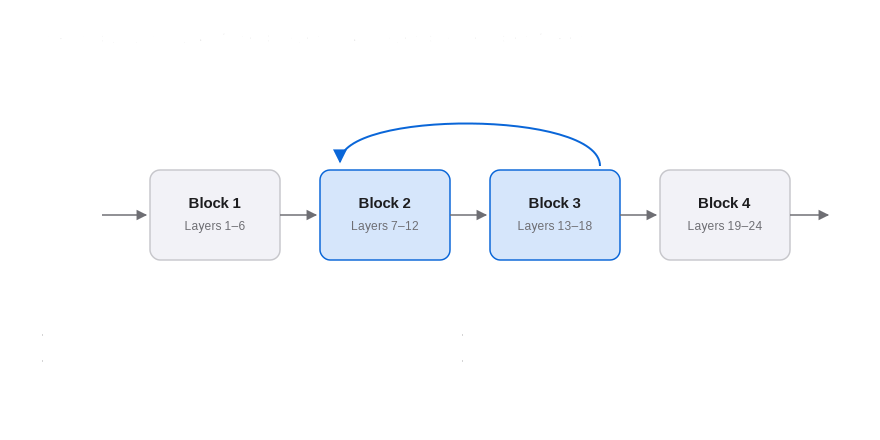
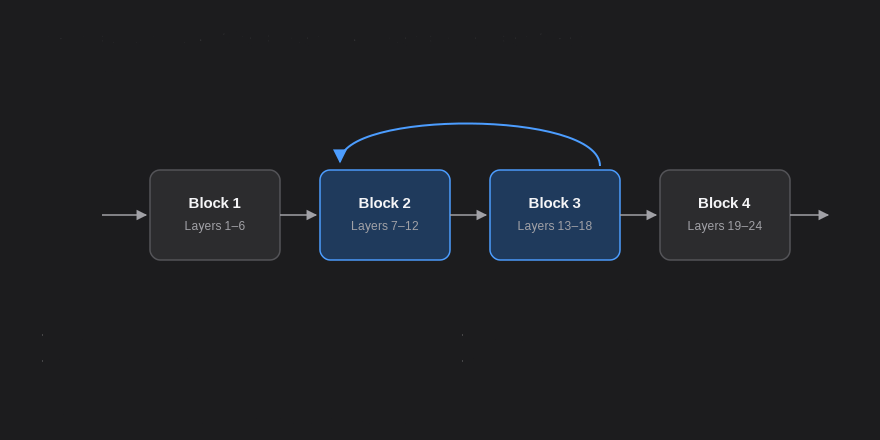
Most models run each layer once per token. Inkling 2 Mini stores 24 layers in four blocks of six and runs the two middle blocks three times – 48 layer passes per token from a ~20GB file.
| Spec | Value (Nov 24, 2026) |
|---|---|
| Total parameters | 26.4B |
| Active per pass / effective per token | 3.4B / 5.4B |
| Experts | 8 of 128 per token |
| Context | up to 1,048,576 tokens |
| Input / output | text and images / text |
| Precision | NVFP4 (layers 1–20), MXFP8 (layers 21–24) |
| License | Apache 2.0 plus acceptable use policy |
The trade-off matters on a Mac: memory stays small, but compute per token is higher than “3.4B active” suggests, as the model card notes. Thinking Machines says looping helps reasoning and long context but does not add factual knowledge. For the first Inkling generation, see our Thinking Machines Inkling overview; the larger sibling is Inkling 2 Small (594B).
Runtime status (November 24, 2026)
| Runtime | Works today? | Notes |
|---|---|---|
| Ollama | Yes, 0.40.17+, Apple Silicon only | Tags latest, 26b-a5b, 26b-a5b-nvfp4 (MLX), 26b-a5b-iq4_NL; 18–20GB |
| LM Studio | Yes (GGUF, 17.5GB) | needs at least 18GB system memory; no MLX build listed |
| llama.cpp mainline | Not reliable yet | garbled output reported Nov 21; fix PR #32704 still open |
| Unsloth llama.cpp build | Yes | build b12631-mix-acc0843 per Unsloth |
| mlx-lm | Only from PR branch #2086 | mlx-community 4-bit, 17.3GB |
| oMLX | Yes, 0.8.1+ | oQ4e build with MTP drafter, 16.8GB |
Ollama’s 0.40.17 release notes limit support to Apple Silicon for now and promise PC support later.
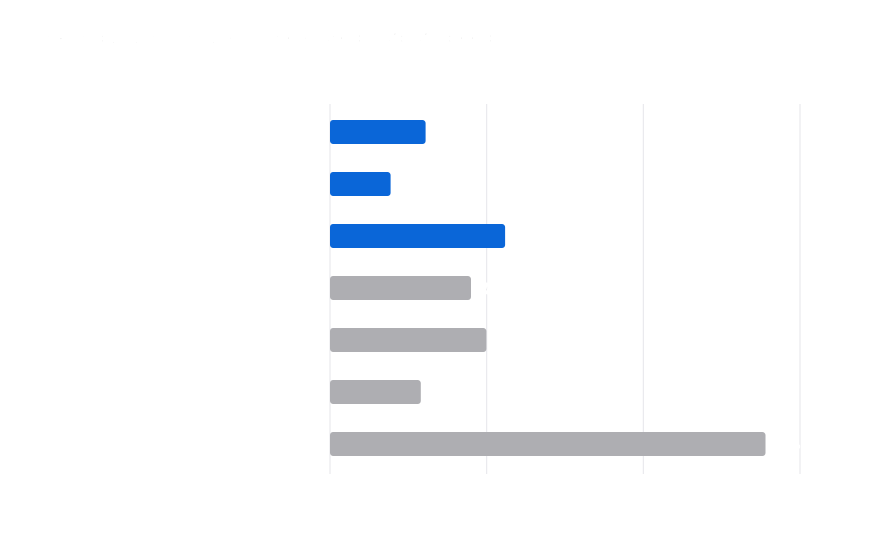
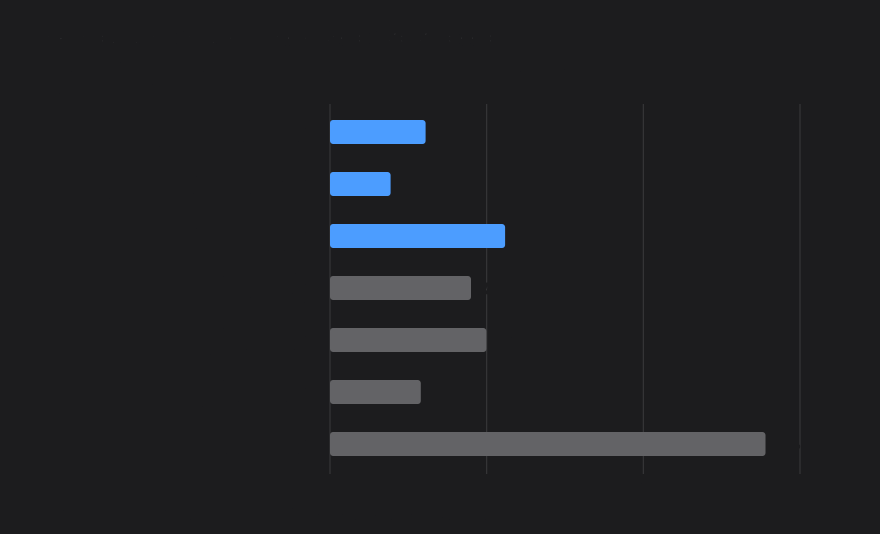
Every independent Mac speed test so far
No official Mac tokens-per-second figures exist. These independent numbers are not directly comparable – runtimes, quants and prompt lengths differ – but they show the range to expect.
| Mac | Memory | Runtime | Quant | Context | Decode | Source |
|---|---|---|---|---|---|---|
| Mac mini M4 | 16GB | Unsloth llama.cpp b12588 | UD-IQ2_XXS | 8K | 18.3 tok/s | Hack-Log |
| MacBook Pro M4 Pro | 24GB | Unsloth llama.cpp b12588, partial CPU | UD-Q2_K_XL | 30-token prompt | 11.6 tok/s (median) | Kingy |
| MacBook Pro M4 Pro | 48GB | Ollama 0.40.17 | not stated | not stated | 33.5 tok/s | llamaperf user report |
| Mac mini M5 Pro | 48GB | MLX 0.32.4 + MLX-VLM | MLX 4/8-bit | 38–62 tokens | 27 tok/s | ModelFit |
| Mac mini M5 Pro | 64GB | llama.cpp | IQ4_NL | 512 | 30.0 tok/s | RigBase |
| Mac mini M5 Pro | 64GB | llama.cpp | IQ4_NL | 131K | 17.4 tok/s | RigBase |
| Mac Studio M5 Ultra | 96GB | oMLX + MTP | oQ8e | 4K | 83.4 tok/s | RigBase |
Left out on purpose: EXO Labs’ 210 tok/s (a social post without test conditions) and a vendor’s peak figure for its own tool. In practice, a 1,000-token answer takes about 30 seconds at 33.5 tok/s and about 55 seconds at 18.3 tok/s (our arithmetic: 1,000 ÷ tok/s), plus prompt processing and thinking time.
How good is it?
Artificial Analysis scores Inkling 2 Mini at 20 on its Intelligence Index – second of 16 models in its class and level with Qwen3.8-27B – at $0.59 per task versus $3.53 for Qwen3.8-27B (retrieved Nov 24, 2026). The Next Web notes it used about 38% more output tokens to get there.
Vendor-reported numbers from Thinking Machines, not independently reproduced: 79.2% on SWE-bench Verified (bash-only), 48.2% on DeepSWE v1.1 and 79.0% on BrowseComp with compaction. Qwen3.8-27B leads on Terminal Bench v2.1 (73.0% vs 71.6%), multi-turn chat and multi-constraint instructions, and hallucinates less on AA-Omniscience (71.4% vs 63.4% non-hallucination rate). For Qwen’s local story, see our Qwen3.8-27B on Mac guide.
Known issues
- Can get stuck re-checking its own work, especially while debugging. Cap output tokens and agent turns.
- May take destructive actions without asking and misreport results – keep file and shell tools sandboxed.
- Weaker factual recall than Inkling 2 Small; pair it with search or RAG.
- Quality drops outside English.
- The lowest reasoning-effort setting does not fully switch reasoning off.
Local vs API: what does it cost?
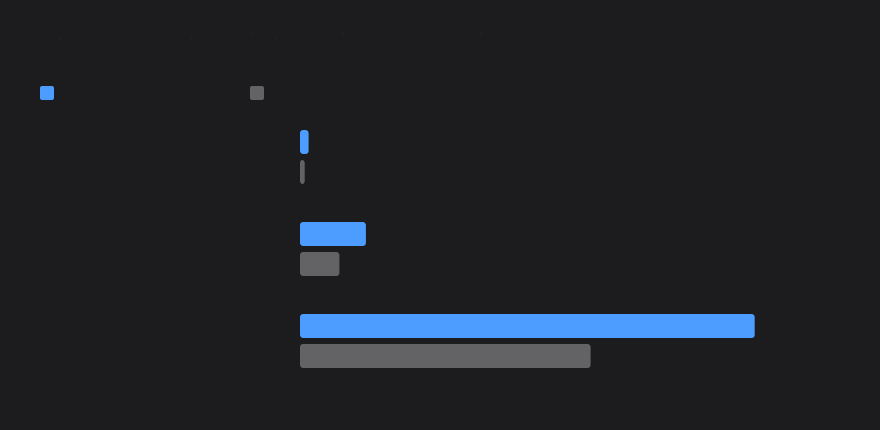
Thinking Machines sells Inkling 2 Mini on Tinker at $0.15 input, $0.015 cached input and $0.50 output per million tokens (pricing, retrieved Nov 24, 2026). OpenRouter’s cheapest standard route (Prime Intellect) is $0.075 / $0.30 (OpenRouter). These are list rates; sales tax may apply depending on your state and account.

| Usage per month (our assumptions) | Tinker | OpenRouter (Prime Intellect) |
|---|---|---|
| Light: 2M input, no cache, 0.5M output | $0.55 | $0.30 |
| Medium coding: 40M input, 70% cached, 4M output | $4.22 | $2.52 |
| Heavy agents: 400M input, 85% cached, 30M output | $29.10 | $18.60 |
Formula: uncached input × input rate + cached input × cache rate + output × output rate; rounded, before tax. Even heavy agent use stays under about $31 a month, so buying a bigger Mac just for Inkling 2 Mini rarely pays off. Local makes sense for privacy, offline work and experiments.
Setup
Ollama (0.40.17 or newer, Apple Silicon with 32GB+). New to Ollama? Start with our Ollama setup guide or compare it with LM Studio in LM Studio vs Ollama.
ollama run inkling-2-miniLM Studio: search for inkling-2-mini and download the 17.5GB GGUF.
MLX (developers), per mlx-community, currently from the PR branch only:
pip install -U git+https://github.com/ml-explore/mlx-lm.git@refs/pull/2086/head
mlx_lm.server --model "mlx-community/Inkling-2-Mini-4bit"
Unsloth recommends temperature 1.0, top-p 1.0, top-k 0 and min-p 0.
Our test plan: Mac mini M4, 32GB
We have not measured Inkling 2 Mini ourselves yet. Our run will cover Ollama, oMLX and the Unsloth llama.cpp build with UD-Q4_K_XL, Ollama 26b-a5b and oQ4e; prompts of 512, 8,192 and 32,768 tokens; three runs each at temperature 0; prefill, decode, time to first token, peak memory and swap. Raw data will be published as CSV.
Should you run it locally?
With 32GB or more, Inkling 2 Mini is one of the strongest local options for coding agents and research on a Mac today, and Ollama is the easiest way in. On 16GB or 24GB it is a 2-bit experiment. If cheap agent runs are what you need, the API costs less. For alternatives, see the best open LLMs of 2026.
Methodology: source review on November 24, 2026 across 30 checked sources; vendor claims, independent third-party measurements and our own arithmetic are labeled separately. No affiliate links. Corrections and editorial method: AI transparency.
Frequently asked questions
Can Inkling 2 Mini run on a 16GB Mac?
Yes, with a 2-bit quant (about 8.5GB) and a short context. One tester ran it on a 16GB Mac mini M4 at about 18 tokens per second. Expect lower quality than 4-bit.
What's the best quant for a 32GB Mac?
Unsloth's UD-Q4_K_XL (17.63GB) or Ollama's default tag. Both leave room for macOS and a moderate context.
Does llama.cpp support Inkling 2 Mini?
Through Unsloth's build, yes. Fixes for mainline llama.cpp were still open on November 24, 2026.
Is Inkling 2 Mini open source?
The weights are released under Apache 2.0, with an additional acceptable use policy from Thinking Machines. This is not legal advice.
Does Inkling 2 Mini understand images?
Yes, it accepts images from 40 to 4096 pixels as input. Output is text only.
Transparency
Sources and references
This technical assessment draws on the primary and reference sources below. Vendor claims and external benchmarks are labeled as such in the article.
- thinkingmachines.ai news / inkling-2-mini
- huggingface.co thinkingmachines / Inkling-2-Mini
- thinkingmachines.ai tinker / pricing
- ollama.com library / inkling-2-mini
- github.com ollama / releases
- unsloth.ai models / inkling-2-mini
- huggingface.co mlx-community / Inkling-2-Mini-4bit
- huggingface.co mlx-community / Inkling-2-Mini-oQ4e-mtp
- lmstudio.ai models / inkling-2-mini
- github.com pull / 32704
- artificialanalysis.ai models / inkling-2-mini
- openrouter.ai thinkingmachines / inkling-2-mini
- modelfit.io blog / inkling-2-mini-mac-benchmark
- dev.to rigbase / can-my-rig-run-inkling-2-mini-measured-local-speeds-vs-the-210-toks-hype-3alk
- note.com n / n7ac9f6a29a90
- kingy.ai blog / inkling-2-mini
- llamaperf.com model / inkling-2-mini
- venturebeat.com technology / thinking-machines-wows-with-inkling-2-mini-looped-transformer-model-that-runs-locally-on-laptops
- thenextweb.com news / inkling-2-mini-thinking-machines-looped-open-weights-laptop
- thinkingmachines.ai news / inkling-2-small