title: “GPT-6 Sol vs Luna: Pricing, Pro Mode, Batch and Every Difference” description: “GPT-6 Sol vs Luna explained: API pricing, 1.05M context, Pro reasoning, Batch discounts, cache costs, benchmarks and the eight visible variants.” date: “2026-09-22” updated: “2026-09-22” lang: “en” slug: “gpt-6-sol-luna-pro-batch-comparison” translationKey: “gpt-6-sol-luna-pro-batch” image: “/assets/gpt-6-sol-luna/hero-en-og.png” imageAlt: “GPT-6 Sol and Luna with Standard, Pro and Batch modes and API pricing” keywords:
- GPT-6 Sol
- GPT-6 Luna
- GPT-6 Sol Pro
- GPT-6 Luna Pro
- GPT-6 Batch
- GPT-6 pricing
- OpenAI API
- reasoning mode
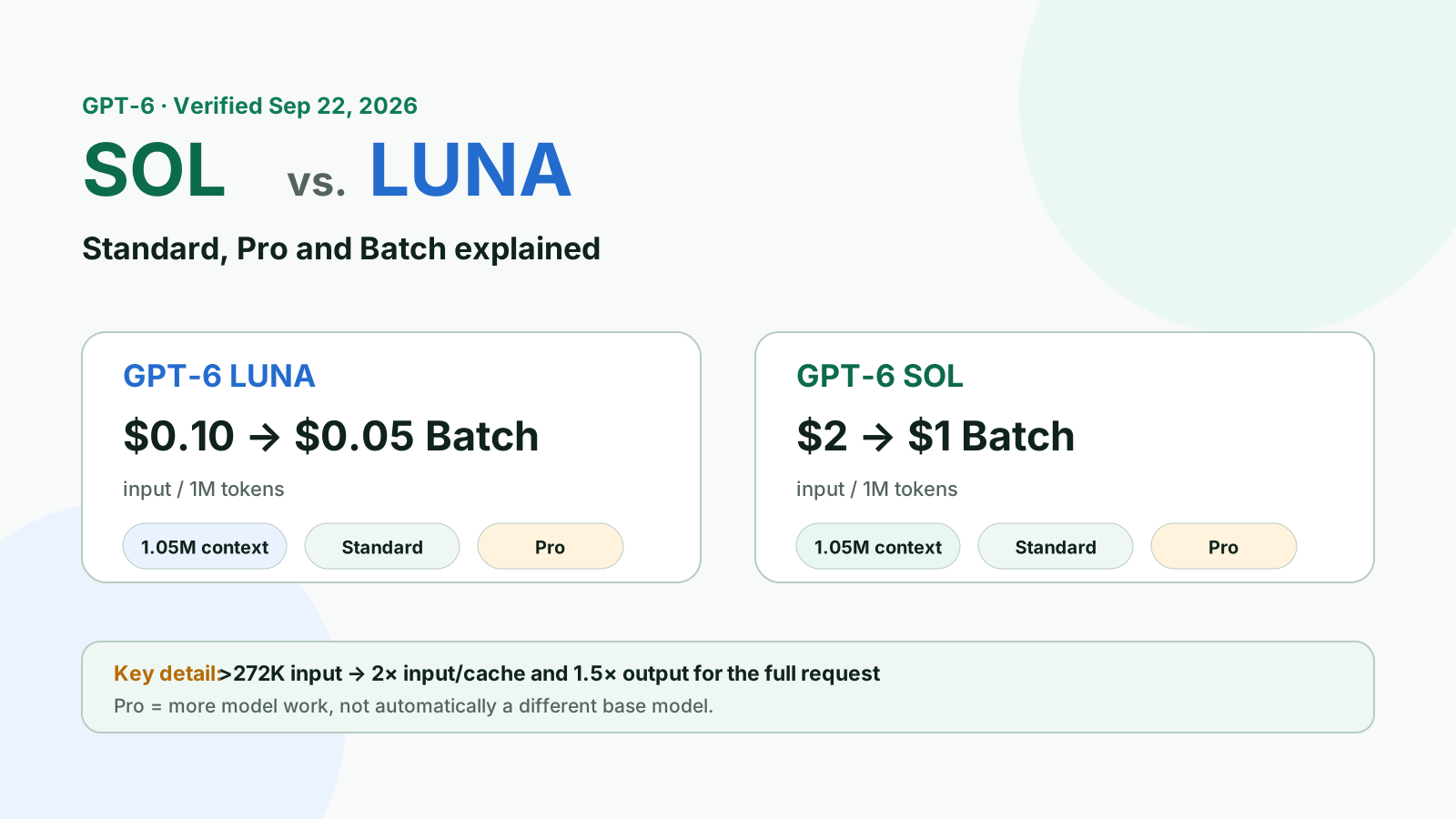
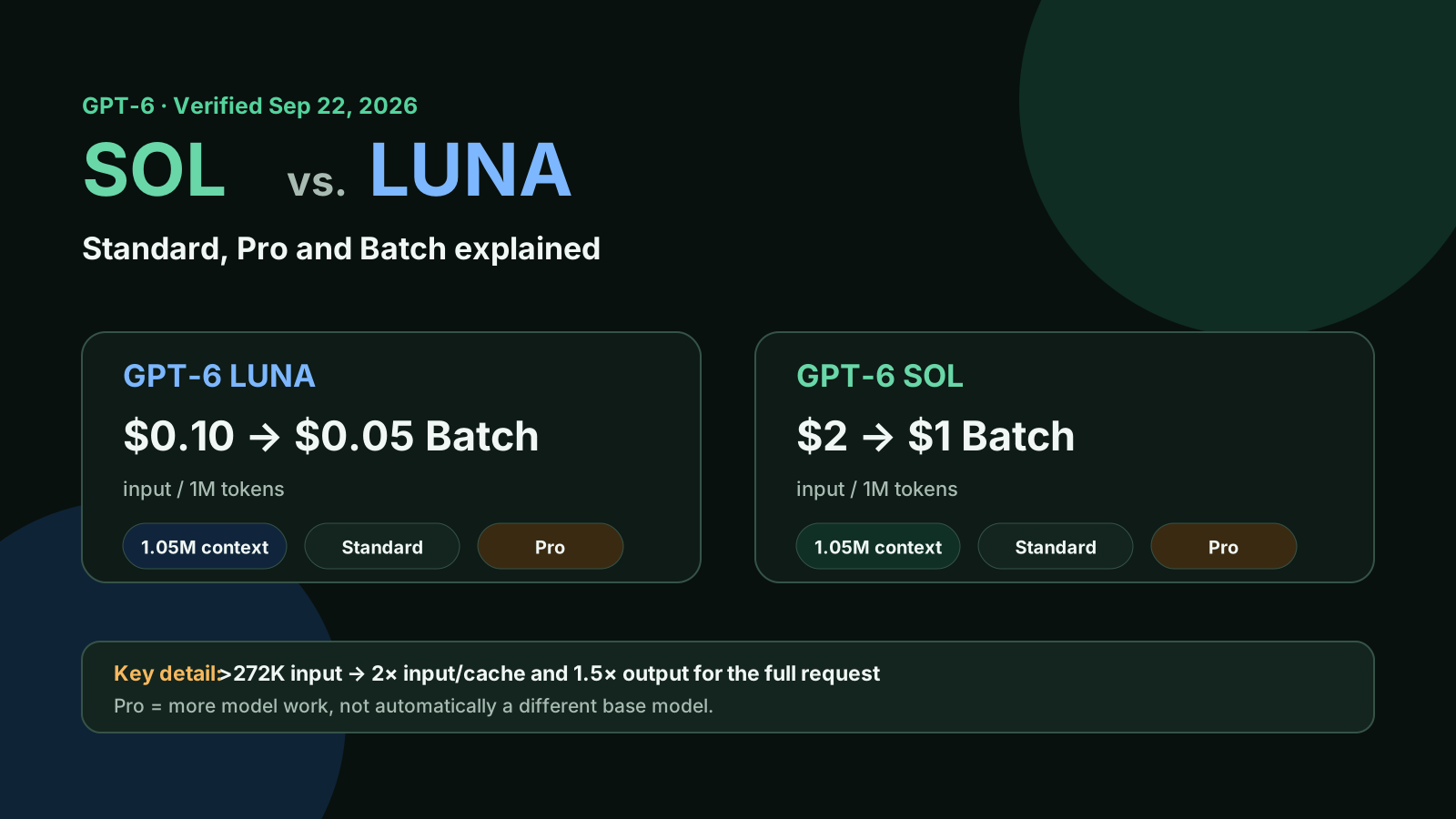
Last verified: September 22, 2026. OpenAI has released GPT-6 Sol and GPT-6 Luna. Sol is positioned for complex coding and agentic workflows; Luna targets focused, high-volume work at much lower cost. Both models support a 1,050,000-token context window and up to 128,000 output tokens. Official API pricing starts at $0.10 per million input tokens for Luna and $2 for Sol. OpenAI launch · Sol documentation · Luna documentation
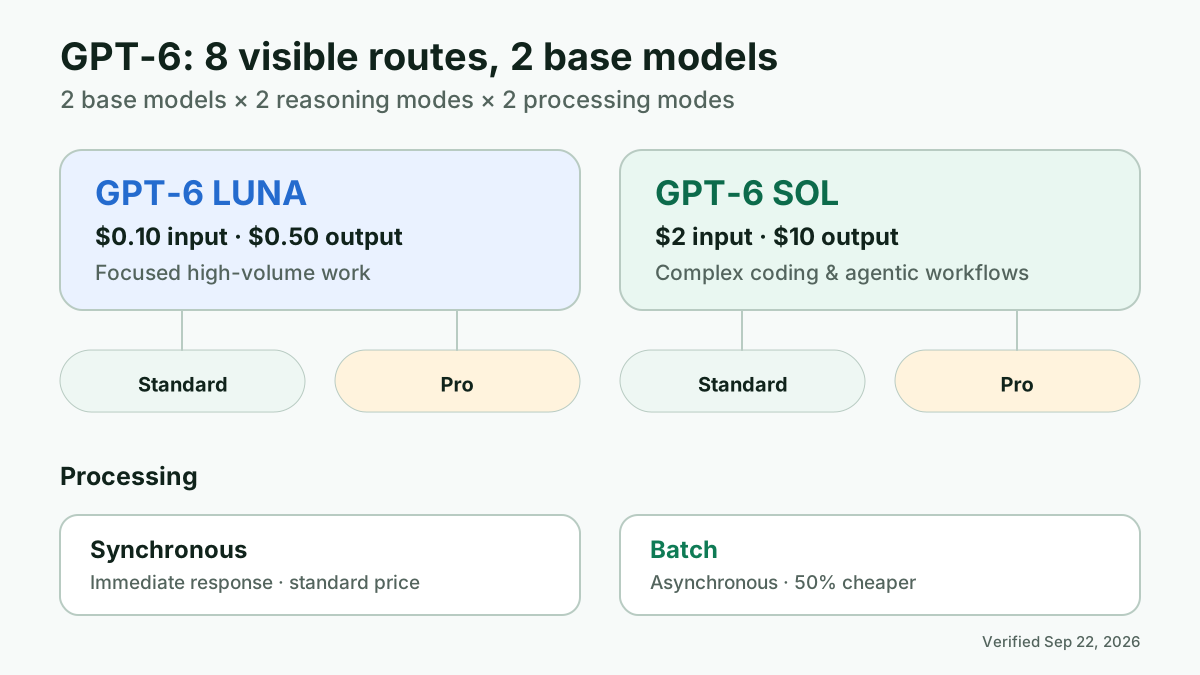
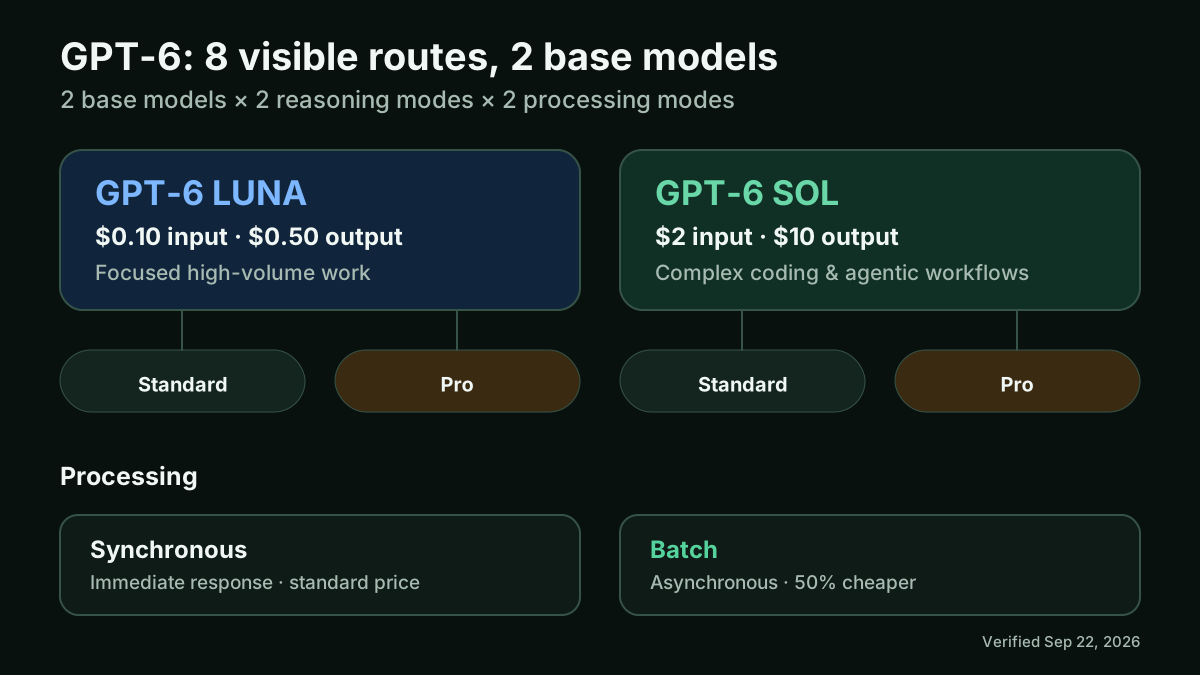
A provider interface may show more than two GPT-6 entries: Standard, Pro, Batch and combinations of those settings. These should not be read as eight independently trained base models. A cleaner model is:
2 base models × 2 reasoning modes × 2 processing modes.
This guide separates those layers, gives the actual token rates and highlights two cost details that are easy to miss in a model picker: additional token usage in Pro mode and the long-context multiplier above 272,000 input tokens.
The eight GPT-6 choices compared by price
| Choice | Base model | Reasoning | Processing | Input / 1M tokens | Output / 1M tokens |
|---|---|---|---|---|---|
| GPT-6 Luna | Luna | Standard | synchronous | $0.10 | $0.50 |
| GPT-6 Luna Pro | Luna | Pro | synchronous | $0.10* | $0.50* |
| GPT-6 Luna Batch | Luna | Standard | asynchronous | $0.05 | $0.25 |
| GPT-6 Luna Pro Batch | Luna | Pro | asynchronous | $0.05* | $0.25* |
| GPT-6 Sol | Sol | Standard | synchronous | $2.00 | $10.00 |
| GPT-6 Sol Pro | Sol | Pro | synchronous | $2.00* | $10.00* |
| GPT-6 Sol Batch | Sol | Standard | asynchronous | $1.00 | $5.00 |
| GPT-6 Sol Pro Batch | Sol | Pro | asynchronous | $1.00* | $5.00* |
* Pro does not have a separate higher per-token rate. OpenAI bills the model work at the selected model’s standard token rates. Pro can perform more model work, however, which can increase the number of billed tokens and therefore the cost per task. OpenAI reasoning modes
GPT-6 Luna: 20× cheaper per token than Sol
GPT-6 Luna costs $0.10 per million input tokens and $0.50 per million output tokens. Cached input costs $0.01, while cache writes cost $0.125 per million tokens. Luna has a 1,050,000-token context window, supports up to 128,000 output tokens, and has a May 18, 2026 knowledge cutoff. OpenAI: GPT-6 Luna
That price structure makes Luna attractive for extraction, classification, summarization, structured output, routine coding, parallel sub-agents and other workloads where many relatively focused tasks must be processed cheaply.
Sol’s list price is 20 times Luna’s for both input and output tokens. That does not mean a completed Sol task will always cost 20 times as much. If Luna needs retries, produces more tokens or fails more often on a hard workflow, the cost gap per successful outcome can shrink.
GPT-6 Sol: the higher-capability workhorse below Astra
GPT-6 Sol costs $2 per million input tokens and $10 per million output tokens. Cached input costs $0.20 and cache writes cost $2.50. It has the same 1,050,000-token context window and 128,000-token maximum output, with an April 20, 2026 knowledge cutoff. OpenAI: GPT-6 Sol
OpenAI describes Sol as being built for complex coding and agentic workflows. GPT-6 Astra remains the company’s top model across the family, while Sol is intended to cover demanding work at a substantially lower price. OpenAI: GPT-6 Sol and Luna
What does “Pro” mean?
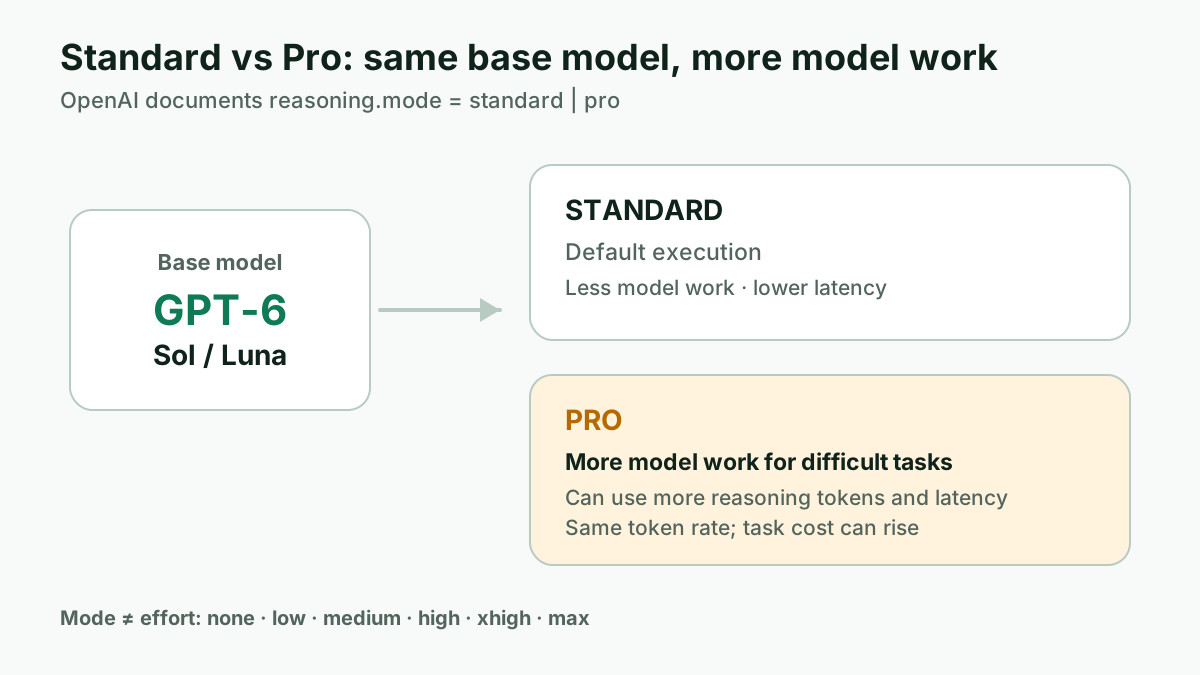
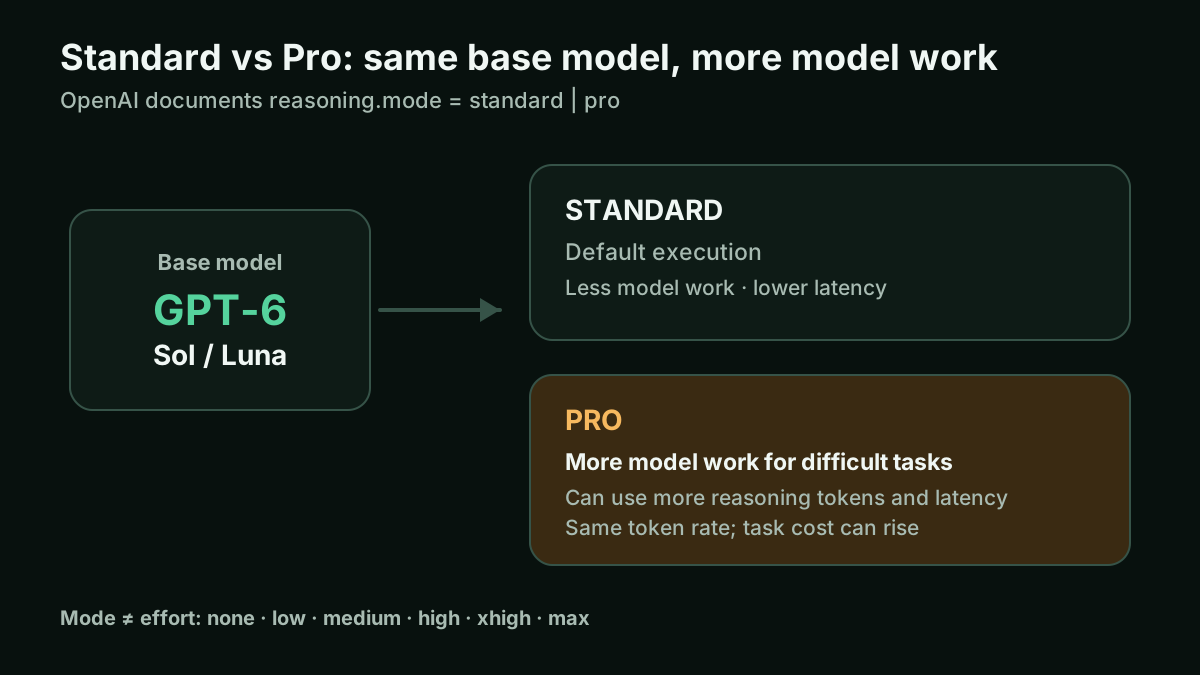
OpenAI documents two reasoning modes for GPT-5.6 and GPT-6 models in the Responses API: standard and pro. Standard is the default. Pro is intended for difficult requests that can tolerate more model work, higher latency and greater token usage. OpenAI reasoning guide
reasoning.mode is separate from reasoning.effort. GPT-6 Sol and Luna support effort levels from none, low, medium, high and xhigh through max. Mode chooses Standard or Pro execution; effort controls how much reasoning the model applies within that mode.
Pro is not a new base model
A “GPT-6 Sol Pro” entry should therefore not be interpreted as a third base model alongside Sol and Luna. The important technical difference is the execution mode, not a new set of model weights.
OpenAI also states that Pro mode aggregates the model work used to produce the answer and bills those tokens at the selected model’s normal rates. That is why a UI can show the same per-token price while the real cost per request still rises.
What does “Batch” mean?
Batch changes how a request is processed, not which base model answers it. OpenAI’s Batch API processes groups of requests asynchronously, uses a separate rate-limit pool and costs 50% less than synchronous APIs. OpenAI specifies a 24-hour turnaround window, although jobs can complete earlier. OpenAI Batch API
That yields these effective Batch rates:
- GPT-6 Luna: $0.05 input / $0.25 output
- GPT-6 Sol: $1.00 input / $5.00 output
Batch is suited to evaluations, large-scale classification, dataset processing, overnight agent jobs and other tasks that do not need an immediate response. It is a poor fit for interactive chat or latency-sensitive agents.
What is “Pro + Batch”?
The two concepts can be combined: Pro allows additional model work, while Batch moves the request to the lower-cost asynchronous processing path.
The visible per-token rate then follows the 50%-discounted Batch rate. Actual cost per completed task can still vary because Pro may produce more reasoning tokens.
The 272K long-context price threshold
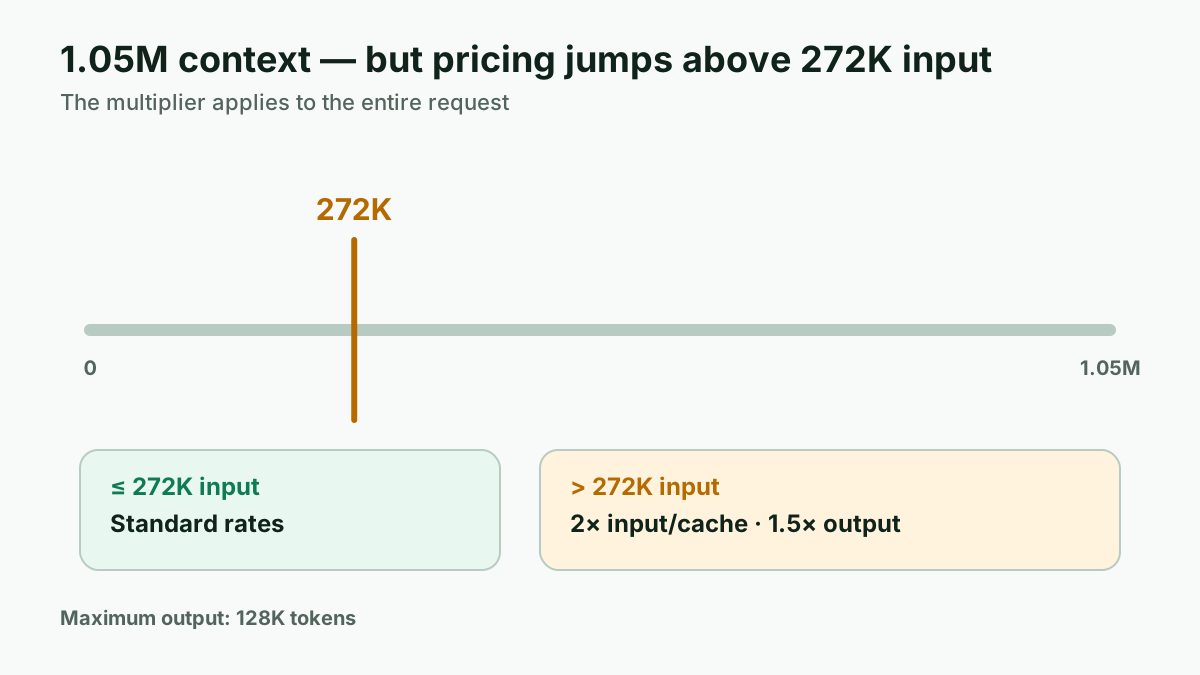
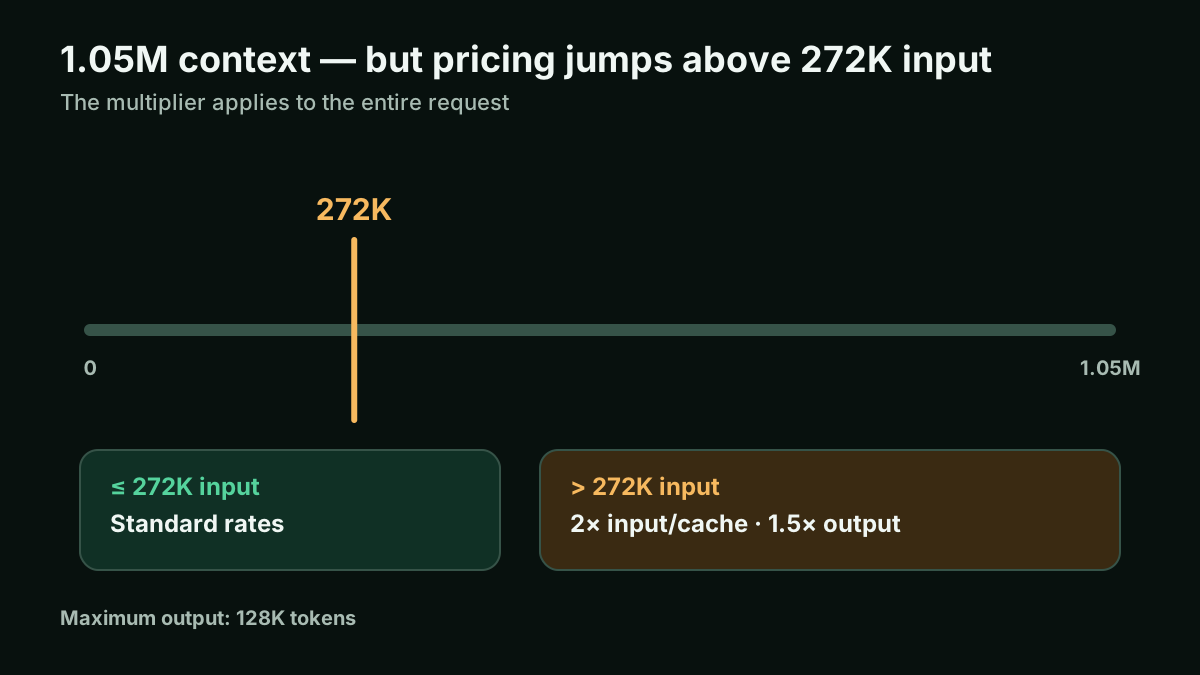
The headline 1.05M context window does not imply one flat token price across the entire range.
OpenAI documents the following rule for both models:
Prompts with more than 272K input tokens are priced at 2× input and cache rates and 1.5× output rates for the full request.
The multiplier applies to the whole request once the threshold is crossed, not only to the tokens above 272K. Sol pricing · Luna pricing
For large repositories, long-running agents and document-heavy workflows, this threshold can matter more to cost than the maximum context-window number.
Prompt caching: cached reads cost 90% less
Cached input is priced at 10% of normal input on both Sol and Luna. OpenAI also says GPT-6 includes caching improvements intended to produce higher cache-hit rates by default. OpenAI launch
This matters for agents that repeatedly send stable prefixes such as system prompts, tool schemas, repository context or fixed instructions.
| Model | Standard input | Cached input | Cache write |
|---|---|---|---|
| GPT-6 Luna | $0.10 / 1M | $0.01 / 1M | $0.125 / 1M |
| GPT-6 Sol | $2.00 / 1M | $0.20 / 1M | $2.50 / 1M |
Cost examples: Luna, Sol and Batch
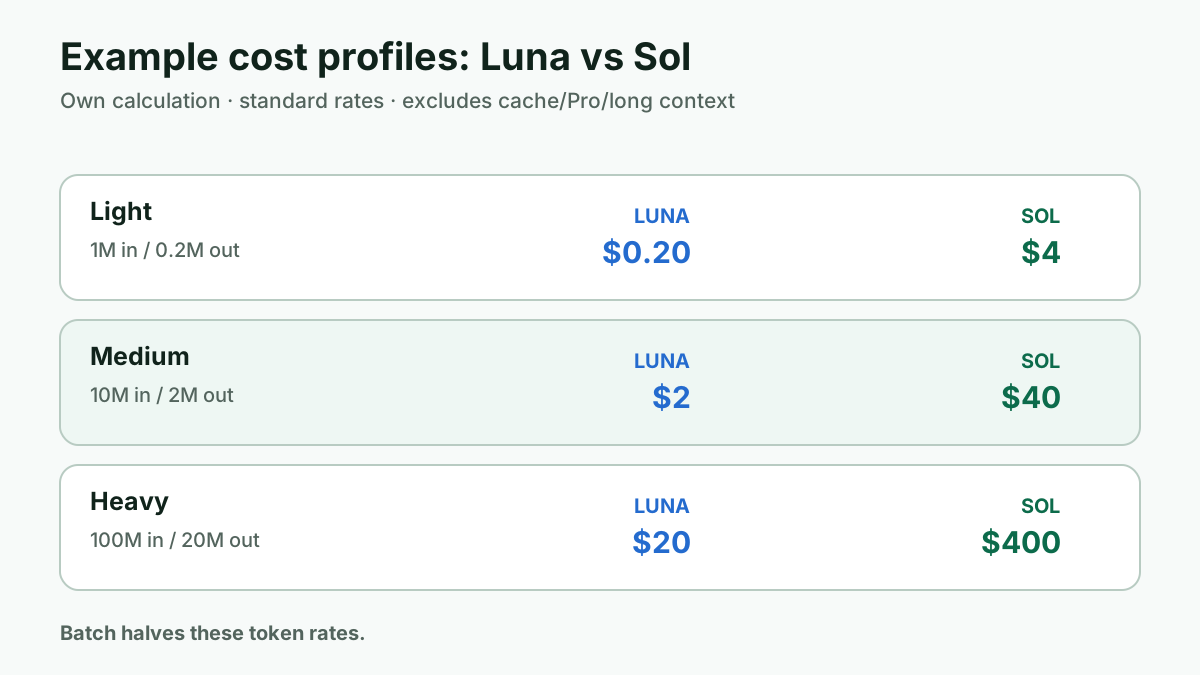
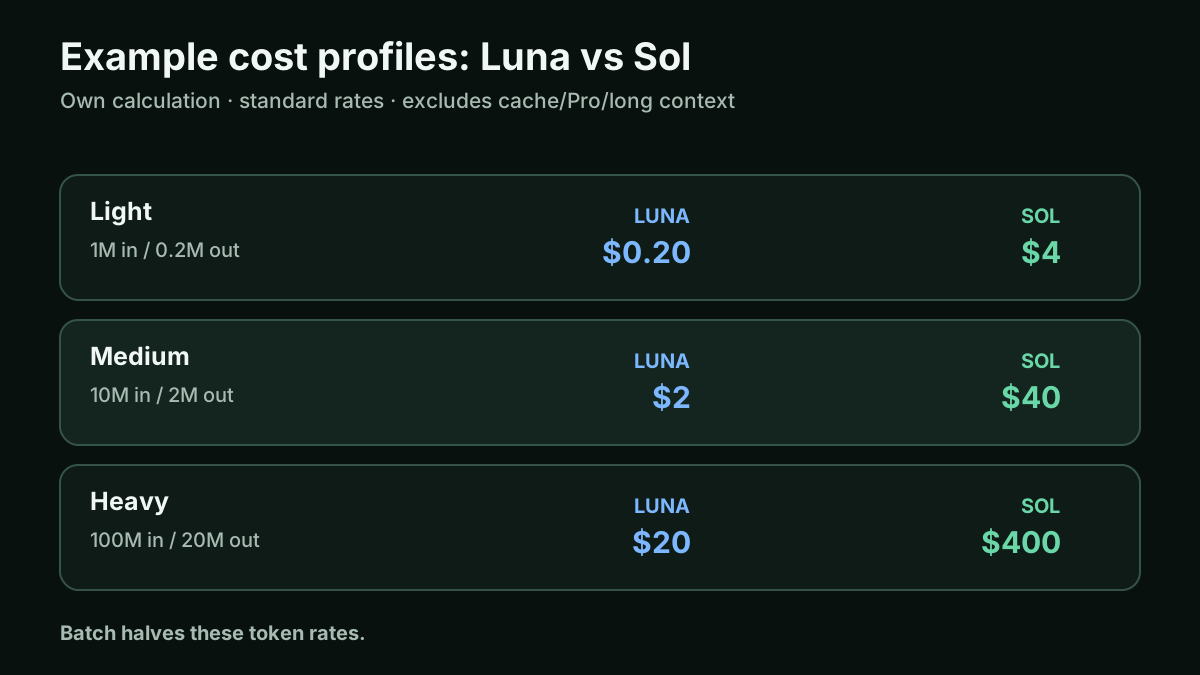
The following are our calculations using OpenAI’s published token rates. They exclude additional Pro reasoning, long-context multipliers, tool fees, regional processing premiums and cache hits.
| Usage profile | Input | Output | Luna | Luna Batch | Sol | Sol Batch |
|---|---|---|---|---|---|---|
| light | 1M | 0.2M | $0.20 | $0.10 | $4.00 | $2.00 |
| medium | 10M | 2M | $2.00 | $1.00 | $40.00 | $20.00 |
| heavy | 100M | 20M | $20.00 | $10.00 | $400.00 | $200.00 |
Formula: input millions × input rate + output millions × output rate
Medium Luna example:
10 × $0.10 + 2 × $0.50 = $2.00
Medium Sol example:
10 × $2.00 + 2 × $10.00 = $40.00
Early GPT-6 benchmarks: useful, but label them correctly
OpenAI published several launch-day results:
- AutomationBench 1.0.6: GPT-6 Sol at
xhighscores 33.2% at $0.27 per task, according to OpenAI. - DeepSWE v1.1: GPT-6 Sol at
maxscores 68.8%; Luna atmaxscores 66.6%. - OSWorld 2.0 offline: GPT-6 Sol at
xhighscores 60.5%.
These numbers come from OpenAI’s launch evaluation. OpenAI notes that its GPT evaluations were run in its research environment or via the API, and production ChatGPT can differ because of system prompts, tools and other setup differences. OpenAI: GPT-6 Sol and Luna
For model selection, launch benchmarks should therefore be complemented with evals on the actual production workload.
Which GPT-6 option should you choose?
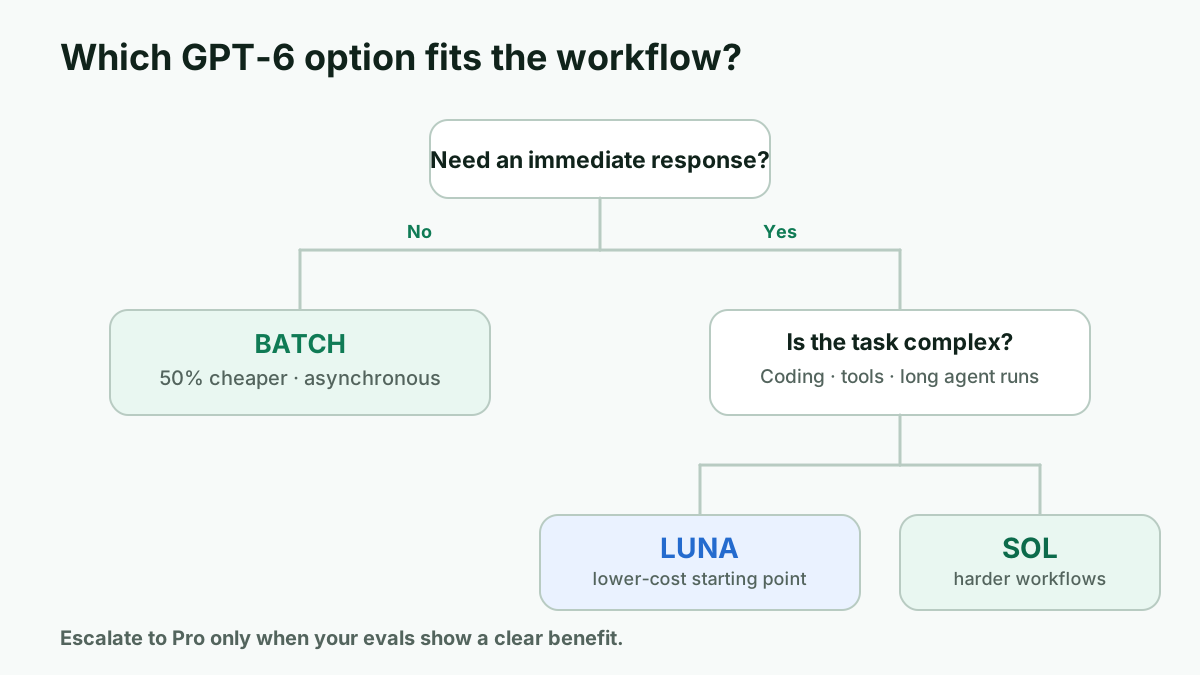
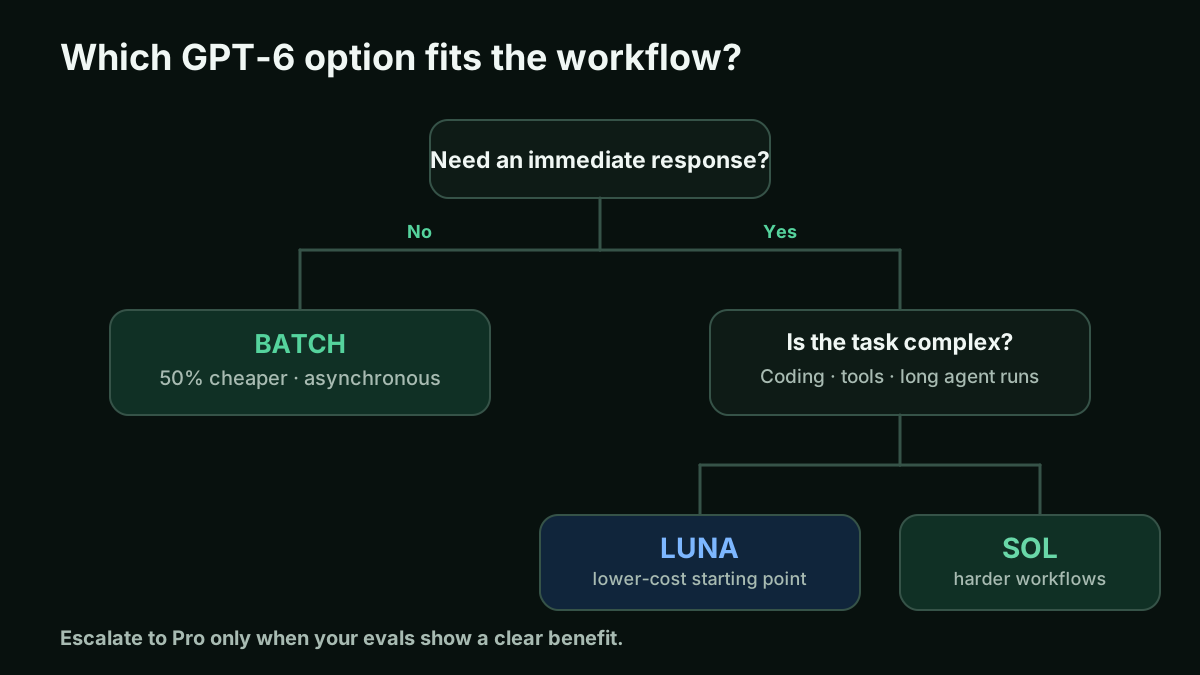
A practical router should start with the cheapest option that reliably meets the quality target.
- Luna Standard for focused, high-volume, cost-sensitive work.
- Luna with higher effort or Pro when Luna is fundamentally capable but a task needs more reasoning.
- Sol Standard for complex coding, tool use and longer agentic workflows.
- Sol Pro only where workload-specific evals show a worthwhile quality gain.
- Batch independently of the base model whenever the job can wait.
GPT-6 Sol vs Luna: specifications at a glance
| Attribute | GPT-6 Luna | GPT-6 Sol |
|---|---|---|
| Positioning | focused, high-volume work | complex coding and agentic workflows |
| Input price | $0.10 / 1M | $2.00 / 1M |
| Output price | $0.50 / 1M | $10.00 / 1M |
| Cached input | $0.01 / 1M | $0.20 / 1M |
| Context window | 1,050,000 tokens | 1,050,000 tokens |
| Max output | 128,000 tokens | 128,000 tokens |
| Knowledge cutoff | May 18, 2026 | Apr 20, 2026 |
| Reasoning effort | none through max | none through max |
| Standard / Pro | yes | yes |
| Batch | 50% cheaper | 50% cheaper |
| >272K input | 2× input/cache, 1.5× output | 2× input/cache, 1.5× output |
Data checked September 22, 2026. Prices are USD per million tokens and exclude possible regional processing premiums and tool-specific fees. Luna docs · Sol docs
Choosing between GPT-6 Sol, Luna, Pro and Batch
The long model list reduces to a simple structure: Luna or Sol, then Standard or Pro, then synchronous or Batch.
Luna is the low-cost, high-volume option. Sol is designed for harder coding and agentic work. Pro is an execution mode that allows more model work rather than a separate base model. Batch halves token rates when a job can wait.
For real agent systems, the most useful metric is not list price alone. Measure cost per successful task, including reasoning tokens, cache hits, retries and long-context multipliers.
Methodology and sources
Technical specifications and pricing were verified on September 22, 2026 against OpenAI’s official model pages, reasoning documentation, Batch documentation and launch post. Benchmark numbers are explicitly treated as OpenAI-published launch results, not as our own independent tests.
Frequently Asked Questions
Is GPT-6 Luna Pro a different model from GPT-6 Luna?
The relevant difference is the reasoning mode. OpenAI documents `standard` and `pro` for GPT-6. Pro allows more model work and may therefore consume more tokens and take longer. [OpenAI reasoning guide](https://developers.openai.com/api/docs/guides/reasoning)
Does GPT-6 Pro cost more per token?
There is no separate Pro surcharge on the selected model's token rate. OpenAI bills the model work performed in Pro at the model's standard rates. Because Pro can perform more model work, total request cost can still be higher.
How cheap is GPT-6 Luna in Batch?
Luna's standard rate is $0.10 input and $0.50 output per million tokens. OpenAI prices Batch and Flex at 50% of Standard, so the effective Batch rates are **$0.05 input and $0.25 output per million tokens**. [OpenAI Luna docs](https://developers.openai.com/api/docs/models/gpt-6-luna)
Is Batch less intelligent than Standard?
Batch is a processing mode, not another base model. Its defining differences are asynchronous execution, separate capacity and a 50% discount. It is not suitable when an application needs an immediate response.
Does GPT-6 Luna have the same context window as Sol?
Yes. OpenAI lists **1,050,000 context tokens** and **128,000 maximum output tokens** for both models. Requests above 272,000 input tokens, however, enter a higher pricing tier for the entire request.